

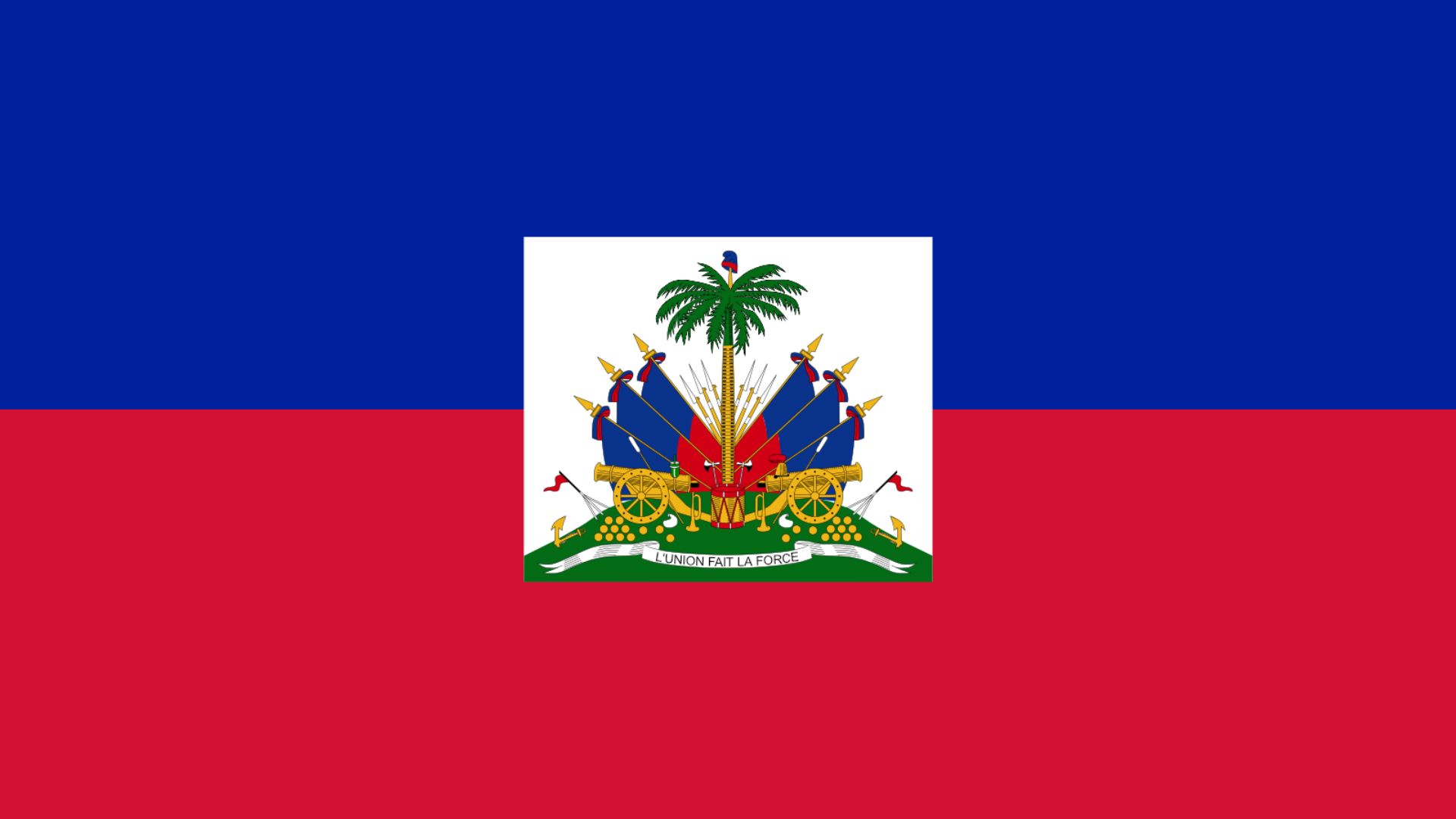
 May 18 is Haitian Flag Day. For Haitians around the world, it is one of the most significant dates on the calendar, a day to honor not just a piece of cloth, but the courage it took to create it.
The story begins in a small city called Arcahaie, on the northern coast of Haiti. It was May 18, 1803, and the revolution was at a turning point. Revolutionary leaders Jean-Jacques Dessalines and Alexandre Pétion had made a decision. They would stop fighting alongside the French and turn against them entirely.
To mark the moment, Dessalines took the French tricolor flag and tore it apart. He handed the pieces to his goddaughter, Catherine Flon, and asked her to sew the blue and red bars back together, leaving the white out entirely. Many historians interpret the removal of the white stripe as exactly what it looks like: a rejection of French colonial rule. The blue and red, stitched together, were said to represent unity between the African and Mulatto classes of Haitians who needed each other to win.¹
Haiti declared independence on January 1, 1804, becoming the first Black republic in the world and the first nation in the Western Hemisphere to permanently abolish slavery.² Flag Day, celebrated every May 18, marks the moment the symbol of that freedom was born.
The flag has gone through many changes since 1803. Just one year after creating the blue and red, Dessalines himself replaced it with a black and red flag. The symbols at the center have shifted across different governments and eras. The version flying today was adopted in 1986. At its center is a coat of arms featuring a palm tree, cannons, and a banner that reads “L’Union Fait La Force.” Strength in unity.³
Today, Flag Day is celebrated with gatherings, music, food, and dancing in Haitian communities across the country and the diaspora. In cities like Miami, New York, and Boston, where large Haitian communities have built deep roots, the day carries real cultural weight. It is a celebration of identity and survival.
But now, the celebration is shadowed by grief.
Arcahaie, the city where Catherine Flon sewed that first flag together, remains surrounded by gang violence. The mayor of Arcahaie has issued a public plea to police and central authorities, asking them to unblock National Road 1 and push back the gangs that continue to threaten the community. In September 2025, armed gangs attacked the area, killing at least 42 people, injuring 25 others, and burning roughly 70 homes. Help has been slow to come.
Across the country, gangs have expanded beyond Port-au-Prince, pushing into outlying areas and tightening their grip on the routes that connect the capital to the rest of Haiti. The birthplace of Haiti’s flag is not an exception. It is an example.
The motto on that flag has never meant more. L’Union Fait La Force. Strength in unity.
Pray that Haitians find it again.
Sources:
- Dayan, Joan. Haiti, History, and the Gods. University of California Press, 1998.
- “Haitian Revolution.” Britannica, britannica.com.
- “Flag of Haiti.” Britannica, britannica.com.
- Robles, Frances. “Haiti’s Chaos Reaches the Town Where Its Flag Was Born.” Miami Herald, May 2024.
- United Nations Office for the Coordination of Humanitarian Affairs. Haiti Humanitarian Update, 2024. unocha.org.
- “Special Representative Name for US Backed-Gang Suppression Force in Haiti” Military.com, December 2025
